
You can safely run lamps, a router, a fridge and a laptop from a power station by plugging each one into the station with a proper cord. Anything that connects the station to your home wiring needs a licensed electrician and a transfer switch. And you never plug a station into a wall outlet with a cable that has a plug at each end.
The easy route: plug devices into the station
This is the plug-in route. You put the station on a hard, dry floor, plug each device into one of its outlets, and switch it on. Nothing touches your home wiring. For most households that is all they need during a power cut.
Some basic habits keep it safe:
- Use cords rated for the load. A thin cord on a high-wattage device can overheat.
- Plug each device straight into the station or into a cord. Avoid chaining power strips.
- Keep the station on a hard, flat, dry surface with space around its vents.
- Keep it away from water and out of direct heat. Do not leave it in a hot car.
- Do not cover it while it runs or charges.
- Keep it where children and pets cannot pull cords.
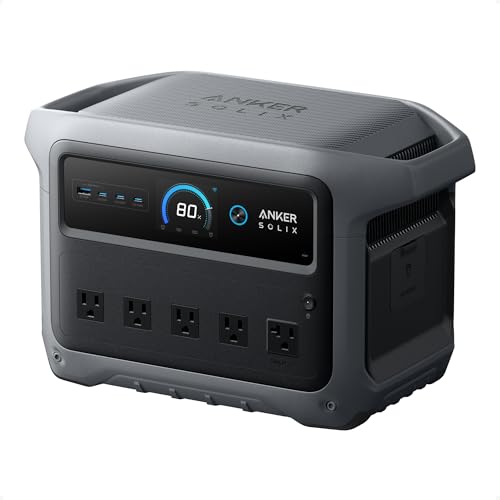
Anker SOLIX C1000 Gen 2 Portable Power Station
A 1,024Wh portable power station with a 2,000W output that charges quickly from the wall or from solar panels.
Product information
Product Review Score
4.53 out of 5 stars
(142)Product links
A station such as the Anker SOLIX C1000 Gen 2 above has several AC outlets and USB ports. That is enough for a fridge, lamps and chargers.
The wired route: transfer switches and inlets
Some people want a station to power circuits in the house, such as the furnace fan or a few outlets. That takes extra equipment. A transfer switch or an interlock kit goes in your breaker panel. A power inlet sits on the outside wall. A licensed electrician installs and tests it. The right setup depends on your panel, your local code and the maker's manual.
Do not try to build this yourself. Mistakes here can start a fire or send power onto the street.
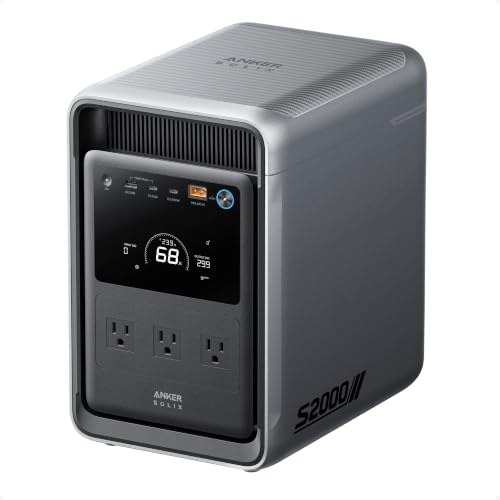
Anker SOLIX S2000 Portable Power Station 2010Wh
A 2,010Wh LiFePO4 power station with 1,500W output that can run a fridge for about 35 hours.
Product information
Product Review Score
4.45 out of 5 stars
(182)Product links
The Anker SOLIX S2000 above is a larger station of about 2,000 Wh. Whatever size you choose, ask the electrician which models work with their equipment before you buy.
Never backfeed
Backfeeding means pushing power into your house wiring through a normal wall outlet, usually with a homemade cable that has a plug at both ends. Never do it. It can energize lines outside your house when the grid is down. A utility worker who thinks the line is dead can be hurt or killed. It can also overload the wiring in your home and start a fire.
It also applies to solar. A panel or a grid-tie inverter plugged into a wall outlet is not a safe backup. Our plug-and-play guide explains how to keep panels and stations on their own chain.
Fuel engines are a different job
If you use a gas or propane generator in addition to a power station, treat it very differently. A fuel engine makes carbon monoxide, a gas you cannot see or smell. Run it outdoors, well away from doors, windows and vents. Never run it in a garage, even with the door open, and never in a basement or a shed that attaches to the house. Keep a working carbon monoxide alarm inside the home, and test it. Store fuel outdoors in approved containers. Let a hot engine cool before refueling.
A battery power station gives off no exhaust, which is one reason people choose them for indoor use. Still keep vents clear.
Charging safely
Charge the station from the wall before a storm. Use the cable from the box, or a matching cable from the maker. Do not use damaged cords. If the station gets hot, smells odd, swells or makes noises, stop using it and read the manual. Contact the maker if the problem stays.
Keep the batteries away from extreme cold and heat. Check the temperature range in the manual. Some lithium batteries do not charge well below freezing, and a few listings mention a heater for that reason.
Plan the room
Put the station near where you will use it. A short cord is safer than a long one. Leave clear floor around it so no one trips. Label the cords if you share the house. Keep a flashlight beside the station so you can find it in the dark.
When to call an electrician
- You want the station to power house circuits.
- You want an outdoor inlet.
- You are not sure which breakers to use.
- You plan to add solar to the house itself.
Call before you buy equipment. A short visit may save you from buying the wrong thing.
A short safety list
Plug devices into the station. Do not backfeed. Use a licensed electrician for any wiring into the house. Run fuel engines outdoors with a carbon monoxide alarm inside. Keep batteries dry and cool.


