
To pick the right backup battery, write down every device you want running, find each one's watts, estimate the hours, and add it all up. The total in watt-hours tells you what size power station to look at. It takes about ten minutes with a pen and the labels on your devices.
Step 1: List the things that matter
Start with what you would miss in the first two hours of an outage. For most households that means a fridge, a few lights, phones, a Wi-Fi router, and maybe a TV or a fan. Add anything you rely on at night, such as a bedside lamp. Keep the list short. A long list means a big and expensive battery.
Step 2: Find the watts for each device
Look for a label on the back or bottom of each device. It lists watts, or volts and amps. Multiply volts by amps if watts are missing.
Here are typical ranges you will find. Your own devices may differ, so check the label.
- Phone charger: 5 to 20 watts
- Wi-Fi router and modem: 10 to 30 watts together
- LED lamp: 5 to 15 watts
- Laptop: 40 to 90 watts
- Television: 50 to 150 watts
- Box fan: 40 to 100 watts
- Fridge freezer: 100 to 200 watts while running
Step 3: Estimate the hours
Write how many hours you would run each device in a day. A phone charger might run for 2 hours. A router might run for 12. A fridge cycles, so treat it as running about a third of the time. A plug-in energy meter gives the real figure for any device you can plug into it.
Step 4: Multiply and add
For each device, multiply watts by hours to get watt-hours. Then add the column.
Here is a sample day for a small household:
- Router, 15 W for 12 hours: 180 Wh
- Two phones, 20 W together for 3 hours: 60 Wh
- Three LED lights, 30 W for 5 hours: 150 Wh
- Laptop, 60 W for 4 hours: 240 Wh
- Fridge, 150 W with a third duty cycle for 24 hours: 1,200 Wh
The total is 1,830 Wh. That is the energy for one day, before losses.
Step 5: Add a safety margin
Inverters lose some energy, so add 20 percent. A day of 1,830 Wh becomes about 2,200 Wh. If you want the battery to last two days between charges from the sun, double it. If you can recharge with panels each day, you can size for a single day and let the sun refill the battery.

EcoFlow DELTA 3 Classic 1024Wh Portable Power Station
A 1024Wh portable power station with a 1800W output, fast AC charging and a UPS-style switchover for sensitive electronics.
Product information
Product Review Score
4.33 out of 5 stars
(45)Product links
The EcoFlow DELTA 3 Classic above sits near the 1,000 Wh class. It would handle a router, phones, lights and a laptop for a long outage, but a fridge on top would need a bigger unit or careful use.
Step 6: Check the peak watts
Add up the watts of everything that might run at the same moment. Compare that to the output watt rating of the station. If your fridge, a fan and a lamp could all be on together, add their watts and keep the total below the station's rating. A heater, a kettle or a hair dryer uses a lot, often 1,000 watts or more. Most people leave those off the list.
Also check the surge rating for anything with a motor. A fridge or a fan needs more power for a moment to start.

BLUETTI Elite 100 V2 Portable Power Station 1024Wh
A compact 1024Wh power station with a built-in UPS switchover and a fast 45-minute charge to 80 percent.
Product information
Product Review Score
4.09 out of 5 stars
(18)Product links
The BLUETTI Elite 100 V2 above is a station in this range. It lists a high output rating and a large battery, which gives you room for the surge.
Step 7: Think about charging
A battery is only useful if you can fill it. Wall charging is the fastest. Car charging is a backup. Solar panels are the way to recover during a long outage. The panel guide in this series explains how many watts of panels you need to refill a given battery.
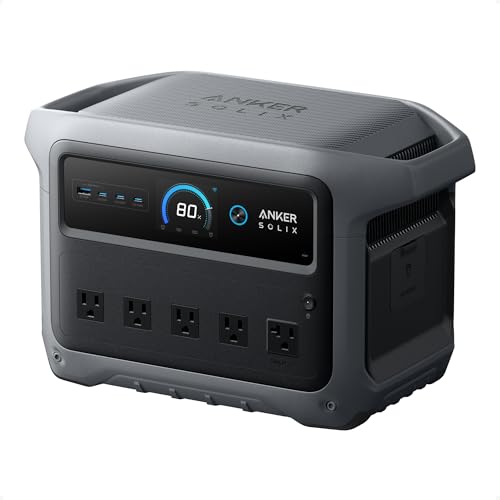
Anker SOLIX C1000 Gen 2 Portable Power Station
A 1,024Wh portable power station with a 2,000W output that charges quickly from the wall or from solar panels.
Product information
Product Review Score
4.53 out of 5 stars
(142)Product links
The Anker SOLIX C1000 Gen 2 above charges quickly from the wall and takes solar input, so it works for both jobs.
A few warnings
Keep the list honest. Space heaters, hair dryers and electric stoves drain a battery in under an hour. Leave them off.
If you rely on a medical device, talk to its maker or your equipment supplier about backup. Sizing a battery for that device is a job for them, not a worksheet.
Write the final number on the first page of your outage plan. Next time you shop, you can compare listings against that one number.


